Quick answer
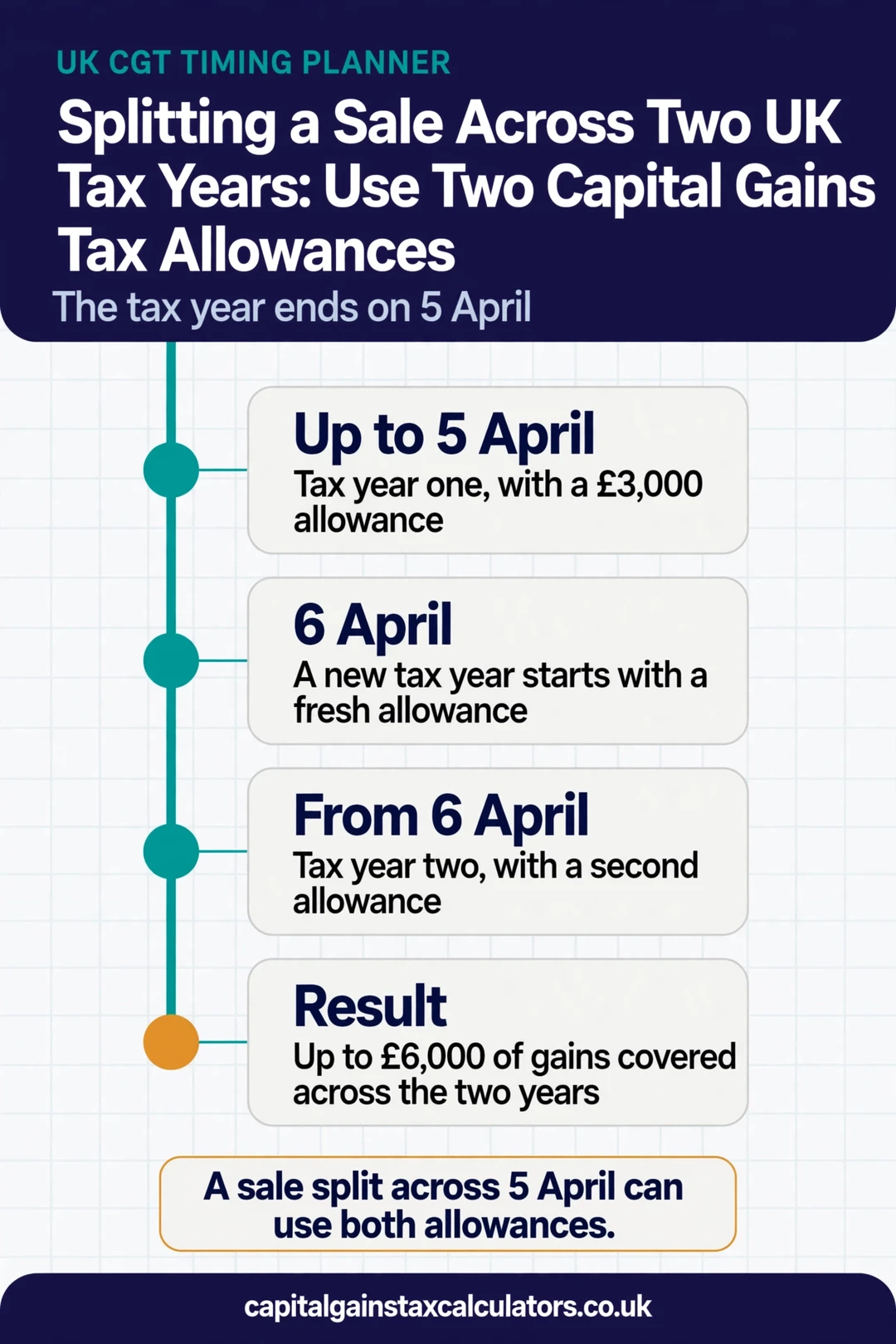
Each tax year gives you a separate £3,000 Capital Gains Tax allowance, so splitting a sale across two tax years can use it twice. The tax year ends on 5 April, so you can sell part of an asset before then and the rest after 6 April. If your income is lower next year, more of the gain may also fall in the 18% band. Waiting carries market risk, so compare the saving with the price risk.
Key facts
- Each tax year has its own £3,000 allowance, and unused allowance cannot be carried forward.
- A split sale can use two allowances, saving up to £720 at the 24% rate.
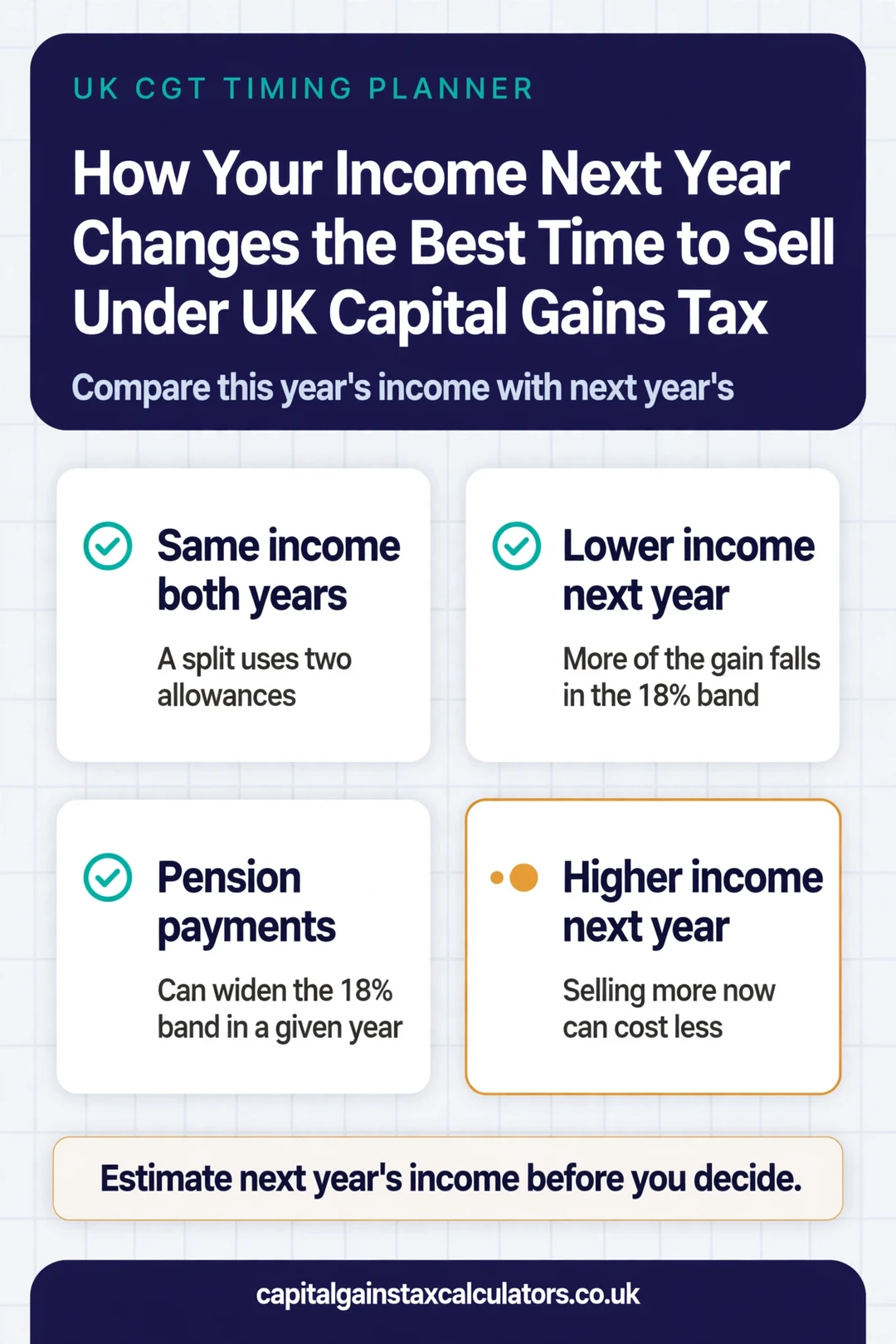
- If your income falls next year, more gain can be taxed at 18%.
- The tax year ends on 5 April. A new one starts on 6 April.
- Waiting means the asset price can fall as well as rise.
How this calculator works
Enter the gain you expect to make, your taxable income this tax year, and your expected income next tax year. If you have other gains in either year, add them so the calculator can use the allowance correctly. The calculator compares three options: selling everything this tax year, selling everything next tax year, and the cheapest way of splitting the sale across both.
You can also choose your own split, such as 50% now and 50% later, and see the result. The calculator assumes that rates, the allowance and the bands next year match 2026/27, so it is an estimate. Check the figures after each Budget.
| Input | What to enter | Tip |
|---|---|---|
| Gain | The total gain on the asset | Work it out first with the shares or property calculator |
| Income this year | Total taxable income this tax year | Include salary, pensions and rental profit |
| Income next year | Expected taxable income next tax year | Use a lower figure if you plan to retire or reduce hours |
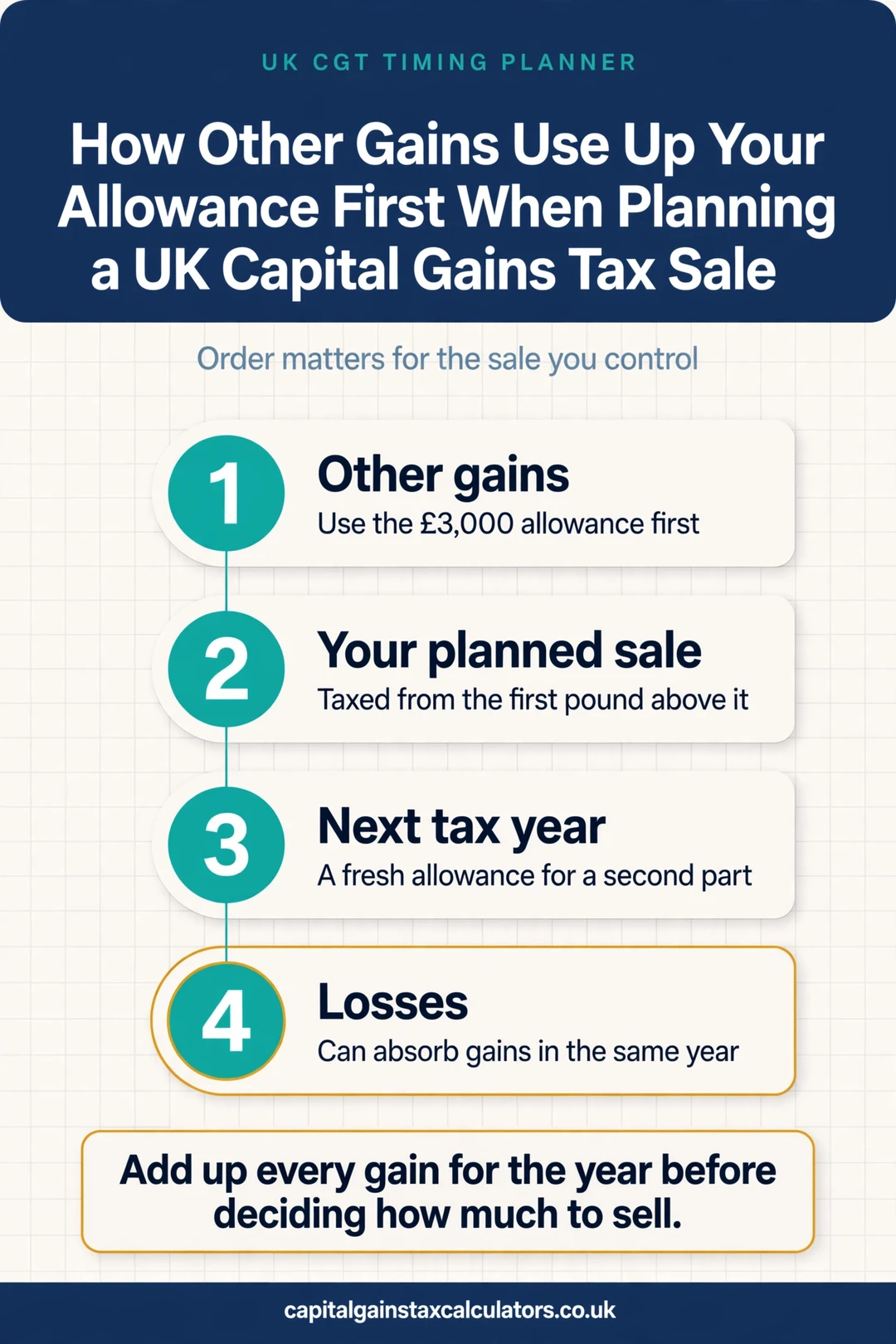
| Other gains | Gains you will make in either year | These use the allowance first |
| Your own split | Share to sell this tax year | Try 50% as a starting point |
Worked example: a £24,000 gain
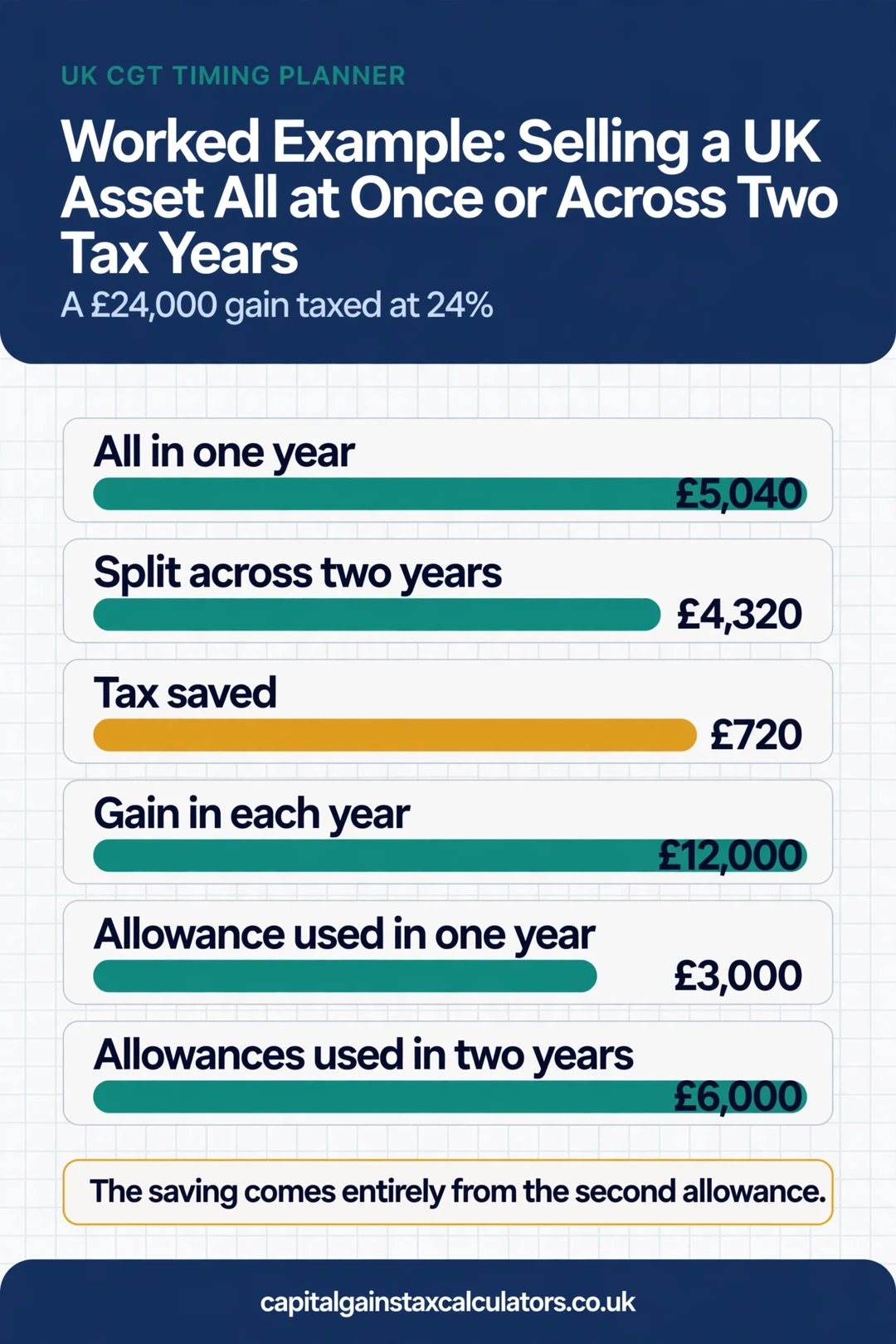
You hold shares with a gain of £24,000. Your income is £60,000 this year and next.
Worked example
Selling in one year or two
- All sold this tax year: £5,040 of tax.
- All sold next tax year: £5,040 of tax, the same, because nothing changes between the two years.
- Best split: realise about £3,000 of the gain now and the rest next year (12.5% now), costing £4,320.
- Saving from splitting: £720.
The saving of £720 is the second £3,000 allowance charged at 24%. It is the same whichever year you start with, so the choice is mainly about how much risk you take by waiting.
When your income changes
The saving is larger if your income will fall. If next year’s income is £20,000, part of the gain falls in the 18% band, so waiting alone costs £3,780, compared with £5,040 for selling now. The cheapest split in that case is 12.5% now and the rest next year, costing £3,240, because the first £3,000 is covered by the allowance and the rest moves into the lower-income year. Common reasons for a lower income next year include retirement, parental leave, a career break or a business closing.
| Scenario | Sell all now | Sell all next year | Best split |
|---|---|---|---|
| Same income both years | £5,040 | £5,040 | £4,320 |
| Income falls to £20,000 next year | £5,040 | £3,780 | £3,240 |
Small gains and other gains
If your gain is small, the allowance may cover it. A gain of £2,500 costs £0 when sold in one year because it is inside the £3,000 allowance. A gain of £8,000 costs £1,200 in one year and £480 if split to use two allowances. Other gains matter too. With £6,000 of other gains already made this year, the allowance is used up first. Selling the £24,000 gain all now would cost £5,760, but moving it to next year costs £5,040.
Practical ways to split a sale
You can only split a sale if the asset can be sold in parts. Shares, funds and crypto are easy to split. A property is not, but you could share a property with a spouse and sell in different years, or gift a share first. Splitting a share sale across 5 April works as long as the sale dates fall in different tax years. You must watch the 30-day rule, which can match a sale with a purchase of the same shares within 30 days. Our bed and breakfast rule guide explains how to avoid it.
| Asset | Can it be split? | Notes |
|---|---|---|
| Shares and funds | Yes | Sell part before 6 April and part after |
| Crypto | Yes | Same, with the 30-day rule in mind |
| A whole property | No | Consider joint ownership or a transfer to a spouse |
| A business | Sometimes | Part disposals may qualify for reliefs |
The risk of waiting
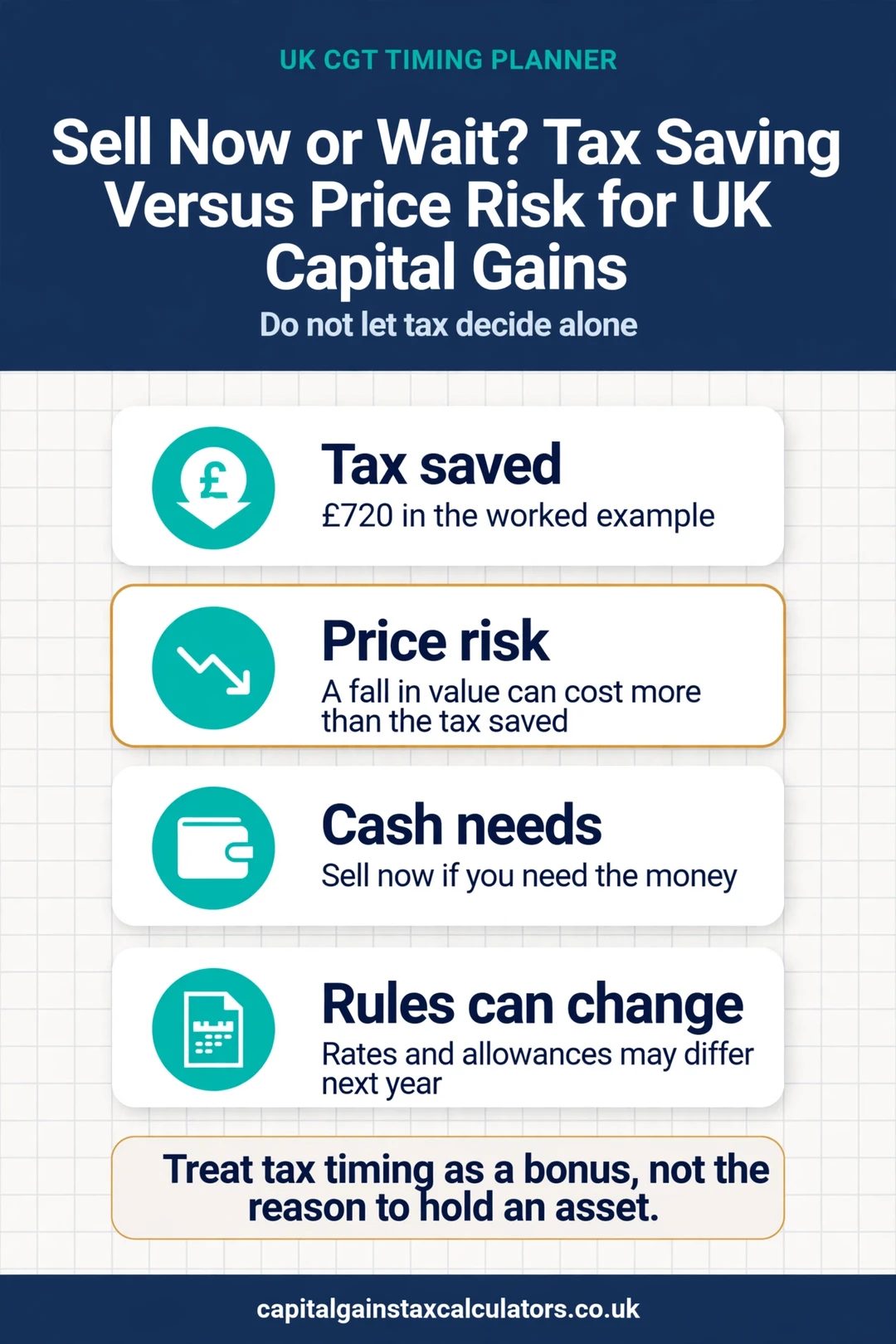
Waiting exposes you to price changes. If the asset falls in value by more than the tax you save, the plan fails. A saving of £720 is small compared with the price swings of many assets. A more cautious approach is to sell part of the asset before 5 April and use the allowance for that year, then decide what to do with the rest. If you need the money, do not delay just for tax. Spreading sales across several tax years is the most common sensible approach.
What this calculator does not cover
- Future changes to the allowance, rates or bands.
- Losses carried forward, which reduce the gain before the allowance.
- Transaction costs of selling in two parts.
- Income Tax or dividend effects of holding on to the asset.
- Property sales, which are not easy to split.
Common mistakes when timing a sale
- Missing 5 April. Sales on or before 5 April belong to the earlier tax year.
- Forgetting the 30-day rule. A quick rebuy can undo your split.
- Waiting without a plan. Market risk can cost more than the tax saved.
- Using a lower income that does not happen. Check your forecast.
- Not claiming the allowance each year. Unused allowance is lost.
- Ignoring the cost of selling twice. Fees can reduce the saving.
What to do next
- Work out your gain with the shares calculator or another tool.
- Enter your income for both years above.
- Look at the best split and compare it with the risk of waiting.
- Read our guide on how to reduce Capital Gains Tax for other options.
- If you have a spouse, test the spouse transfer calculator as well.
Frequently asked questions
Can I use my Capital Gains Tax allowance twice by selling in two tax years?
Yes. Each tax year has its own £3,000 allowance. If you sell part of an asset before 5 April and the rest after 6 April, you can use the allowance in both years.
When does the tax year end?
On 5 April. A new tax year begins on 6 April. The date of the sale decides which year a gain belongs to.
Can I carry forward an unused allowance?
No. An unused annual exempt amount is lost at the end of the tax year. This is why many people sell a little each year.
Is it worth waiting to sell until next year?
Only if the tax saving is more than the risk of a price fall and you do not need the money. The calculator shows the saving so you can weigh it.
What if my income is lower next year?
More of the gain may fall in the 18% band, so waiting can save more than the allowance alone. The calculator tests your figures.
Does the 30-day rule affect a split sale?
Yes, if you buy the same asset back within 30 days of a sale. The sale is then matched with the purchase and the planned gain changes.
Can I split the sale of a property?
Not easily. You can, however, share ownership with a spouse or sell part of an interest. Take advice before you do.
Do I have to report a gain inside the allowance?
Not unless you file Self Assessment and your total proceeds are over £50,000. Losses should be reported if you want to carry them forward.
Will the allowance and rates stay the same next year?
Not necessarily. The rates and the allowance can change at a Budget. The calculator assumes 2026/27 figures for both years.
Is this tax avoidance?
No. Using each year’s allowance and choosing when to sell are standard, accepted ways of managing tax.
Official sources
- GOV.UK: Capital Gains Tax annual exempt amount
- GOV.UK: Capital Gains Tax rates
- GOV.UK: Work out if you need to pay Capital Gains Tax
Related guides and calculators
This page gives general information for UK taxpayers and is not tax advice. Capital Gains Tax rules can change and your own circumstances matter. Check the latest rules on GOV.UK or with a qualified tax adviser before you act.