Quick answer
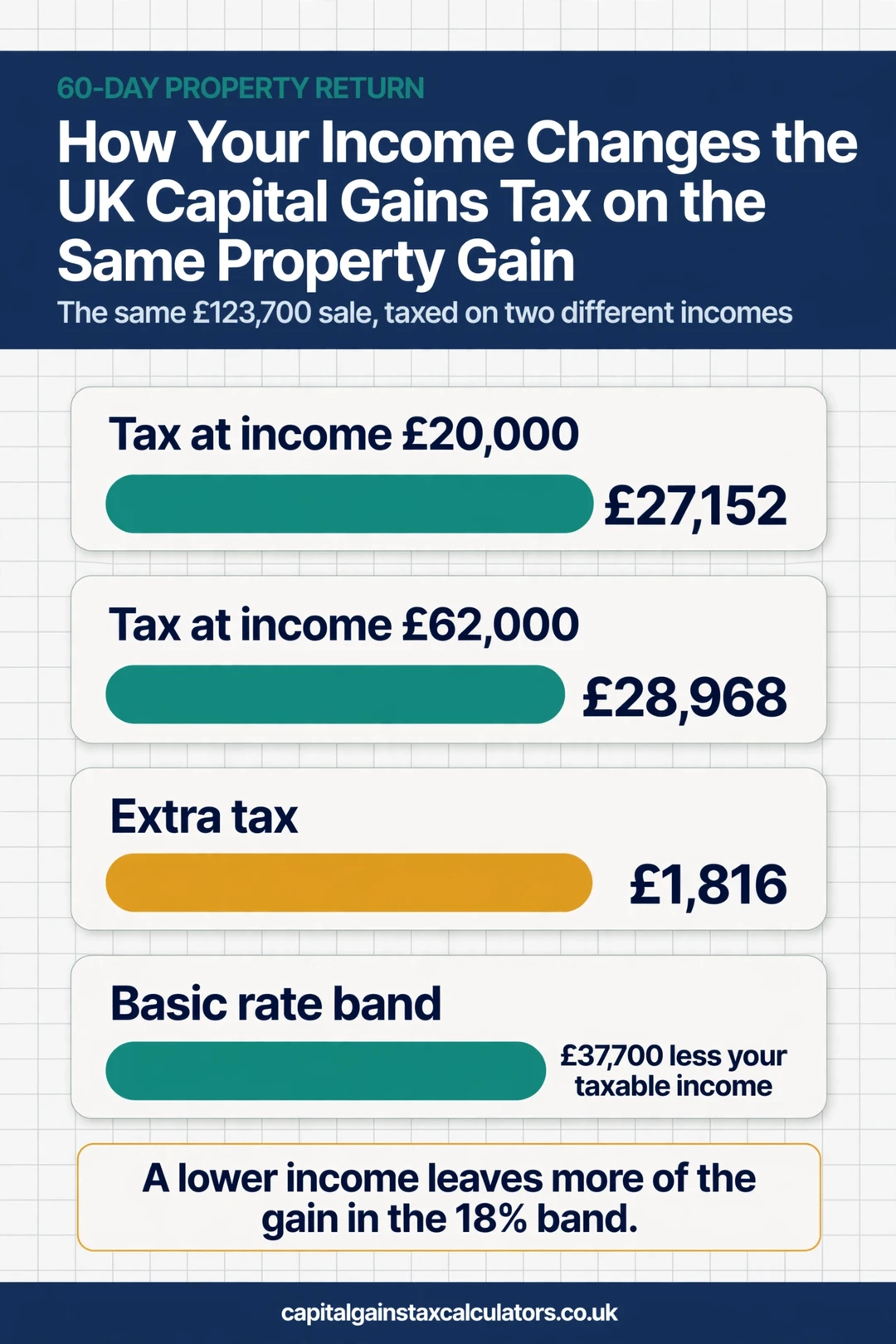
If you are a UK resident and sell UK residential property with Capital Gains Tax to pay, you must file a 60-day return and pay the tax within 60 days of completion. You file online with a Government Gateway account and receive a payment reference. A gain of £123,700 on an income of £62,000 gives tax of £28,968 in 2026/27. Non-residents must report every UK property sale, even with no tax due.
Key facts
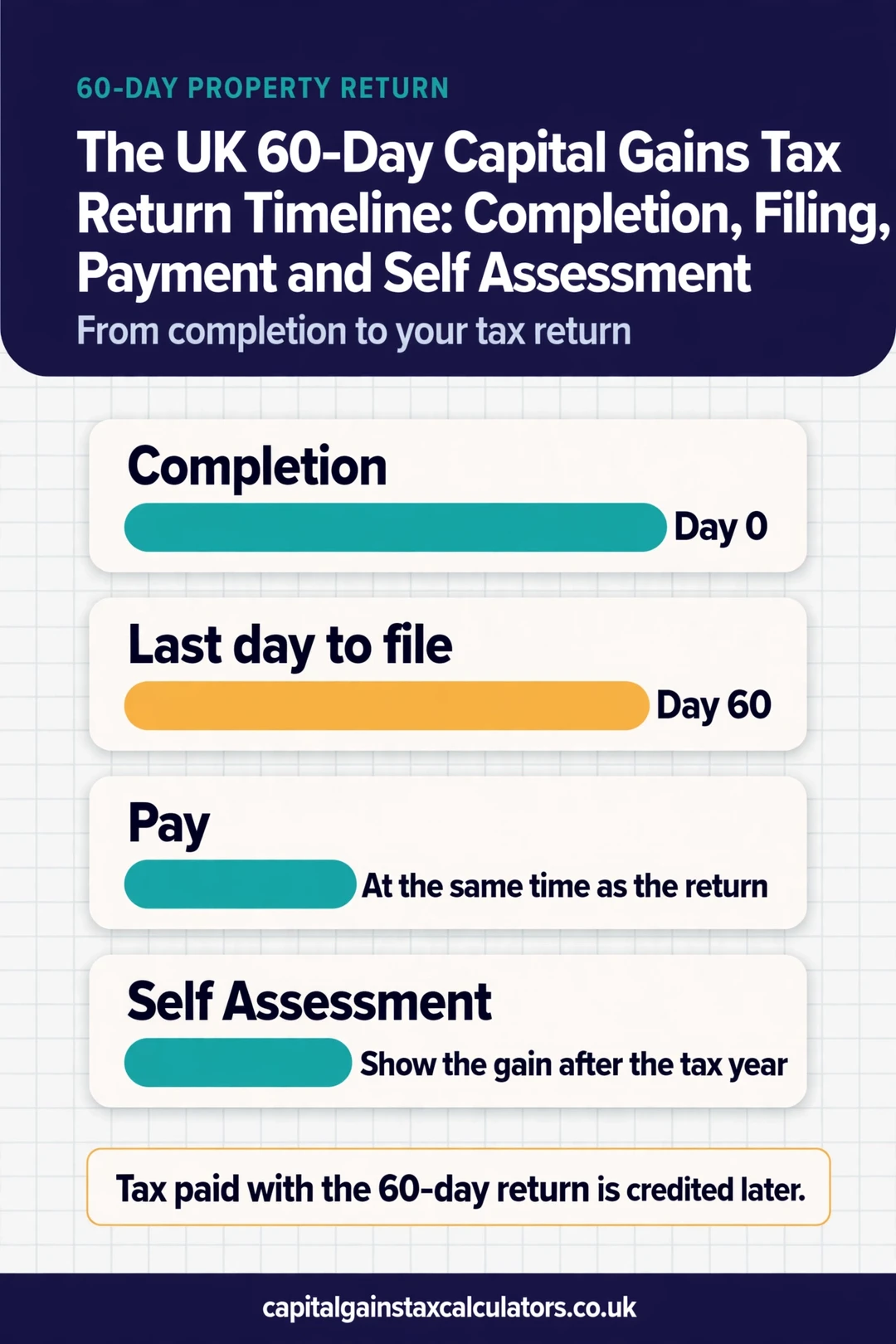
- Deadline: 60 days from completion, not exchange.
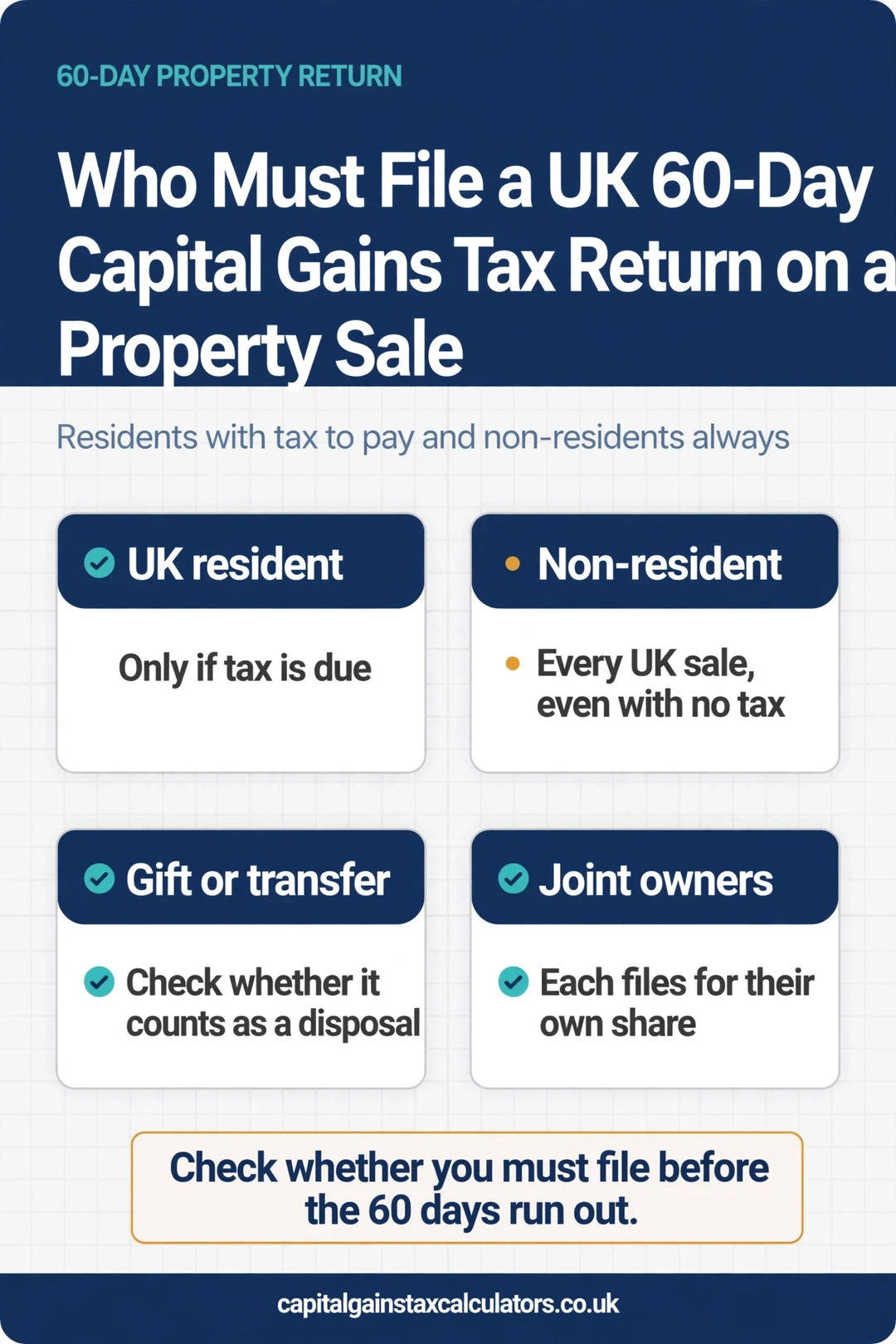
- Who: UK residents with tax to pay on UK residential property, and non-residents on all UK property and land.
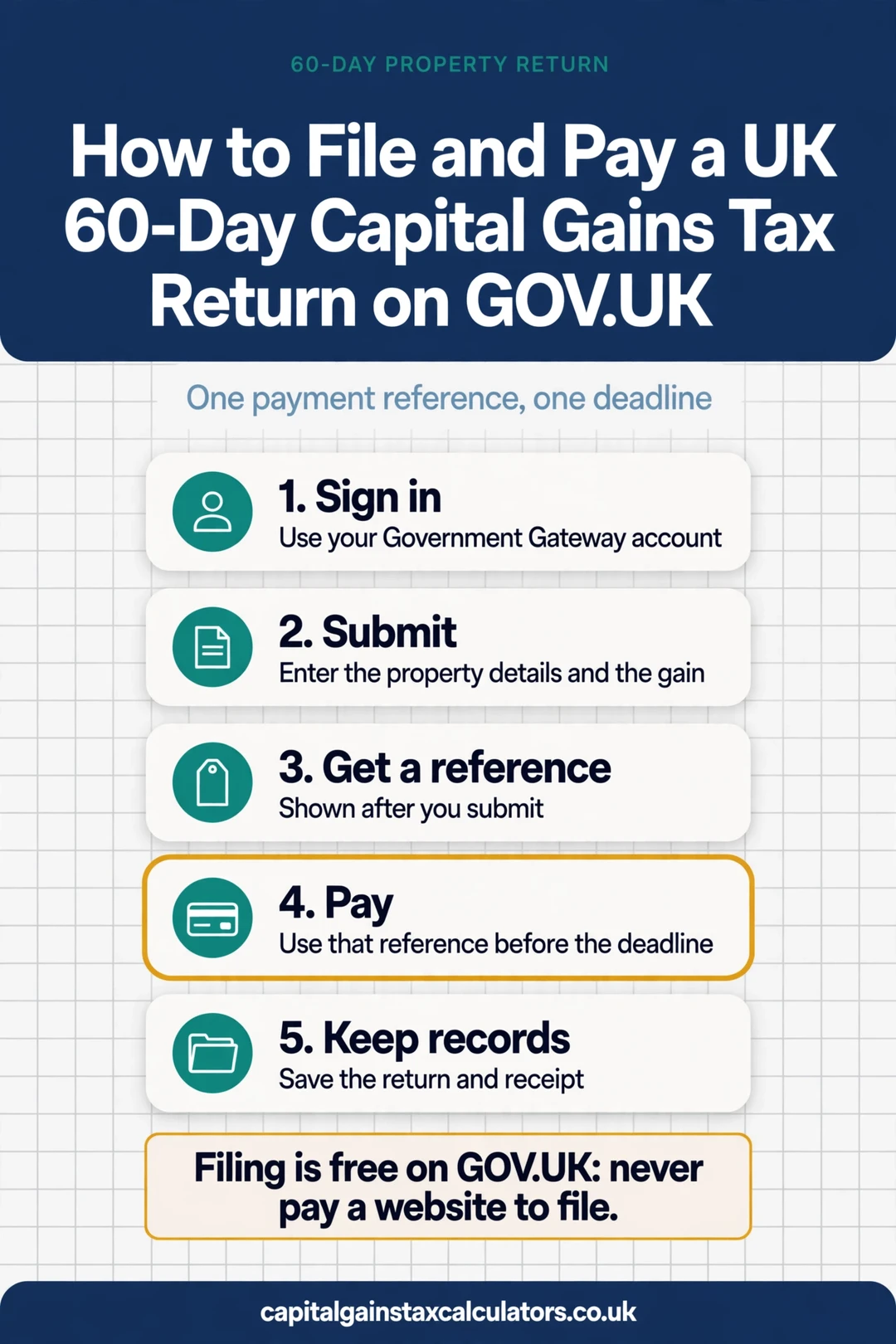
- How: online, with a Government Gateway account.
- Pay: the tax is due at the same time as the return.
- Self Assessment: if you file a return, show the gain there too and the tax paid is credited.
- Joint owners: each owner files their own return.
Good to know
Find your date first
Our 60-day deadline calculator shows the last day for your completion date. To estimate the tax, use the property calculator.
Who has to file a 60-day return
The 60-day return is for sales of UK residential property when Capital Gains Tax is due. It covers second homes, buy-to-lets, inherited houses that are sold and homes that have gains outside the main home exemption. It also covers some gifts and transfers that count as disposals. UK residents with no tax to pay do not need to file. A sale that is covered fully by Private Residence Relief, or where the gain falls within the allowance or is wiped out by losses, usually has no tax to pay. Non-residents are different: they must report every disposal of UK property or land, whether or not there is any tax, within the same time. See our non-resident guide.
| Situation | 60-day return needed? |
|---|---|
| UK resident sells a second home with tax to pay | Yes |
| UK resident sells a buy-to-let with a gain over the allowance | Yes |
| UK resident sells a main home fully covered by relief | No tax, so usually no |
| UK resident sells a property at a loss | No tax, so usually no, but report the loss on a return |
| Non-resident sells any UK property or land | Yes, even with no tax |
Step 1: Find your completion date
The 60 days start on the day the sale completes, which is the day ownership passes and the money is exchanged. This is the date on the completion statement. It is not the date contracts were exchanged, which can be weeks earlier. For a gift, it is the date of the transfer. Count calendar days, including weekends, and do not rely on the last day: use our deadline calculator.
Step 2: Work out the gain
You need the gain to fill in the return. Take the sale price, deduct the purchase price, buying costs, improvements and selling costs, then apply any Private Residence Relief or other relief. Our calculation guide explains each part.
Worked example
A buy-to-let sale
You sell a rental house for £410,000 that cost £255,000. Buying costs were £9,500, selling costs £7,800 and improvements £14,000. The gain is £123,700. After the £3,000 allowance, £120,700 is taxed. On an income of £62,000, the tax is £28,968. You file and pay within 60 days of completion.
Step 3: Gather what you need
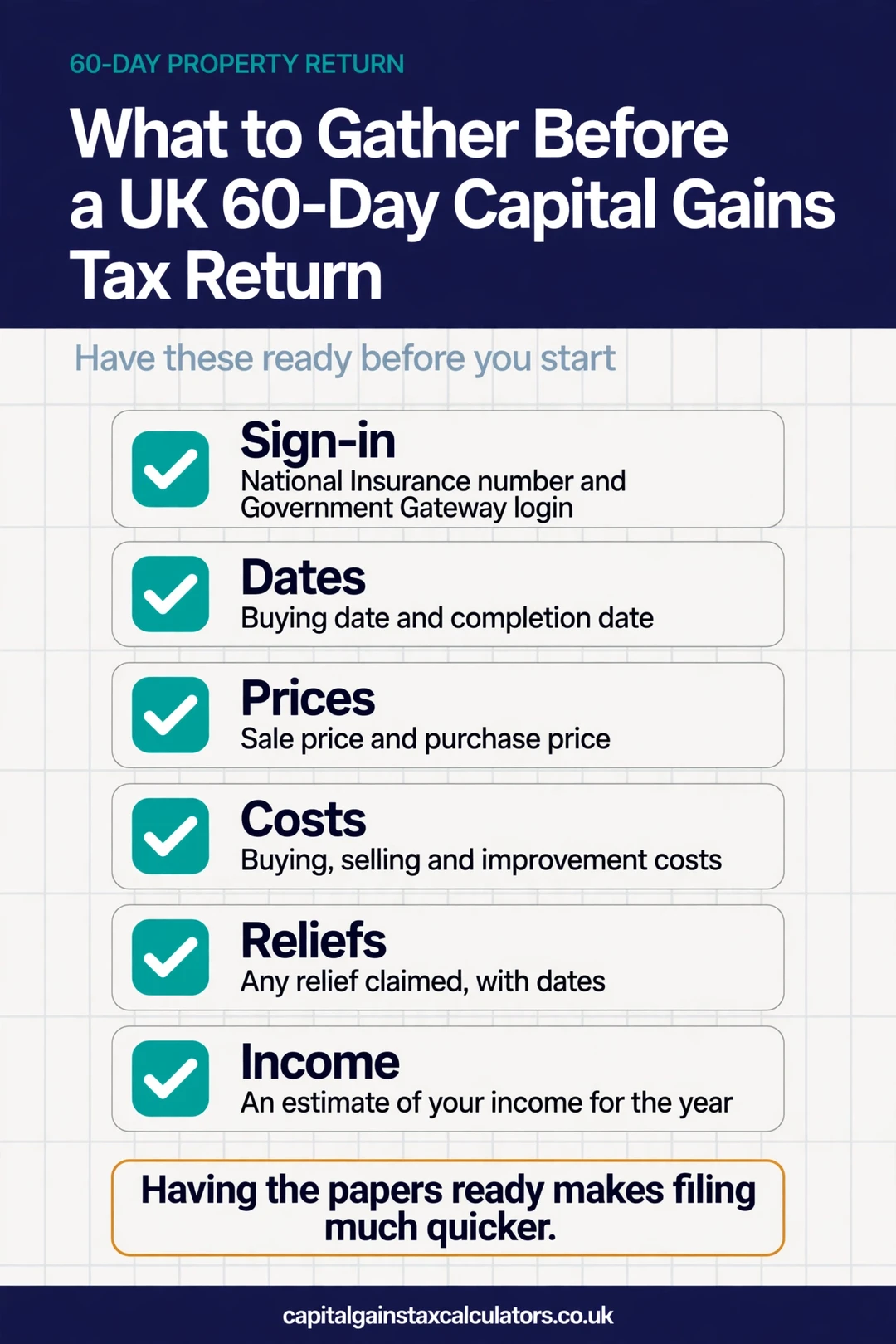
Before you start, collect the details the return asks for. Having them ready makes filing quicker and reduces mistakes.
- Your National Insurance number and your Government Gateway user ID and password.
- The dates you bought and sold the property, and the completion date.
- The sale price and the purchase price, or the market value for a gift or inheritance.
- Buying and selling costs, and the cost of improvements.
- Any relief you are claiming, such as Private Residence Relief, and the dates behind it.
- Details of losses, and your estimated income for the year, which decides your rate.
Step 4: Create or sign in to your Government Gateway account
You file the return online through GOV.UK. If you do not have a Government Gateway account, you can create one. You can file for yourself, or an agent such as an accountant can file for you. Only use the official GOV.UK service. Be cautious of search adverts and of any site that asks you to pay to file, as the return itself is free.
Step 5: Complete the return
The return asks about the property, the dates, the proceeds, the costs, any reliefs and the gain. It also asks for your income estimate, because HMRC needs to know which rate applies. The estimate matters: with an income of £62,000, the tax on the gain above is £28,968, and with a lower income of £20,000, part of the gain falls in the basic rate band and the tax is £27,152. For joint owners, each completes a return for their own share. If the property was owned equally, a 50% share of the same sale gives each owner a tax of £14,124.
| What the return asks | Where to find it |
|---|---|
| Completion date | Completion statement |
| Sale price | Completion statement |
| Purchase price and costs | Original purchase papers |
| Improvement costs | Invoices and contracts |
| Relief details | Dates you lived in the property |
| Estimated income | Your payslips and other income |
Step 6: Pay the tax
After you submit, you receive a payment reference. Pay using the details provided, and allow time for the payment to arrive before the deadline. The tax is due at the same time as the return. If you cannot pay in full, contact HMRC before the deadline to discuss a payment plan, because interest and penalties can build up once you are late.
Step 7: Show the gain on your Self Assessment return
If you complete Self Assessment, you must also include the gain on that return. The tax you already paid with the 60-day return is credited, so you do not pay twice. Your final bill is recalculated using your full year of income and gains, so you may owe more or get a refund. If you do not file Self Assessment, HMRC can use the figures from the 60-day return and the estimate of your income.
Step 8: Keep records
Keep a copy of the return, the payment reference and the papers that support your figures. You may need them to answer questions, and to support your base cost if you sell more of the asset later.
What happens if you are late
Missing the deadline can lead to a late filing penalty, which grows the longer the return is outstanding. Interest is charged on unpaid tax from the day it was due. If you realise you have missed the deadline, file as soon as possible, because the penalties usually rise with delay. If you disagree with a penalty or have a reasonable excuse, such as serious illness, you can appeal.
Common mistakes when reporting a property sale
- Counting from exchange. The clock starts at completion.
- Forgetting the return because the gain looks small. Check the gain after reliefs and costs, and whether you are a non-resident.
- Using a wrong income estimate. It changes the rate and the bill.
- Not showing the gain on Self Assessment. The return and the 60-day payment must match.
- Leaving out costs. Buying, selling and improvement costs lower the tax.
- Using an unofficial site. Filing the return is free on GOV.UK.
What to do next
- Find your completion date and your last day to file.
- Calculate the gain with our property calculator.
- Gather your papers and sign in to your Government Gateway account.
- File, pay and keep records. Then add the gain to your Self Assessment return if you file one.
Frequently asked questions
What is the 60-day Capital Gains Tax return?
It is an online return that UK residents file within 60 days of completion when they sell UK residential property with Capital Gains Tax to pay.
When do the 60 days start?
On the day of completion, which is when ownership passes, not when contracts are exchanged.
Do I need to file if I owe no tax?
UK residents usually do not. Non-residents must report every UK property or land disposal, even with no tax.
How do I file the return?
Online through GOV.UK with a Government Gateway account. It is free to file.
How do I pay the tax?
After you file, you get a payment reference. The tax is due at the same time as the return.
Do I still report on my Self Assessment return?
Yes, if you file one. The tax you paid on the 60-day return is credited against your final bill.
What if I sold a property jointly with someone?
Each owner files their own return for their own share, using their own allowance and rate.
What if I miss the deadline?
HMRC can charge a late filing penalty and interest. File as soon as you can and contact HMRC if you cannot pay.
Can my accountant file it for me?
Yes. An agent can file the return on your behalf once authorised.
Does the 60-day rule apply to shares or land with no house?
No. Shares and other assets are reported through Self Assessment or the real-time service. Non-residents must report UK land too.
Official sources
- GOV.UK: Report and pay Capital Gains Tax on UK property
- GOV.UK: Report and pay your Capital Gains Tax
- GOV.UK: Tax when you sell property
- GOV.UK: Capital Gains Tax rates and allowances
Related guides and calculators
This page gives general information for UK taxpayers and is not tax advice. Capital Gains Tax rules can change and your own circumstances matter. Check the latest rules on GOV.UK or with a qualified tax adviser before you act.