Quick answer
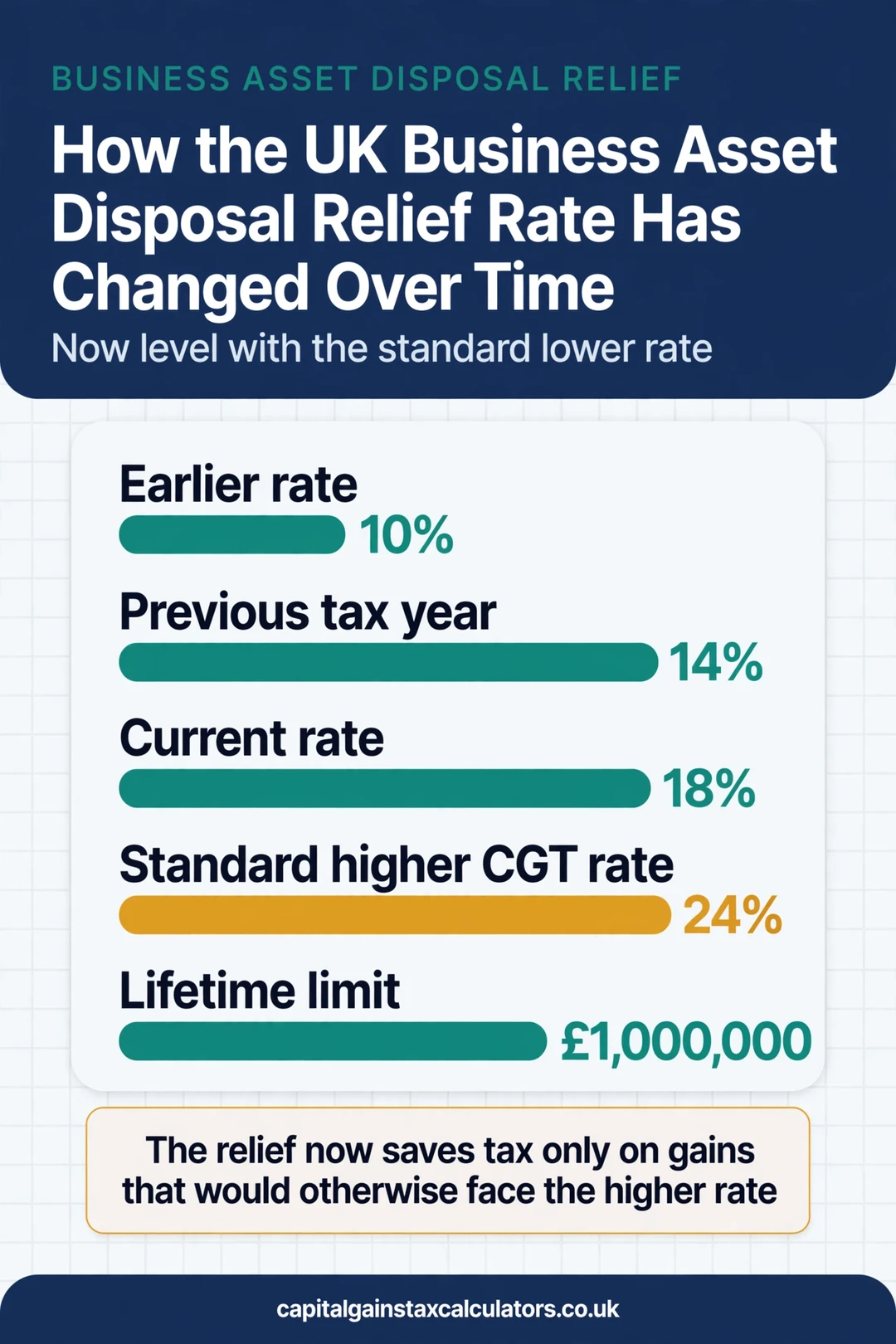
Business Asset Disposal Relief lets you pay 18% Capital Gains Tax on qualifying gains from selling all or part of a business, up to a lifetime limit of £1,000,000. The rate is 18% in 2026/27, level with the standard lower rate. You must have owned the business or shares and met the conditions for at least two years before the sale, and you must claim the relief.
Key facts
- The BADR rate is 18% in 2026/27, up from lower rates in earlier tax years.
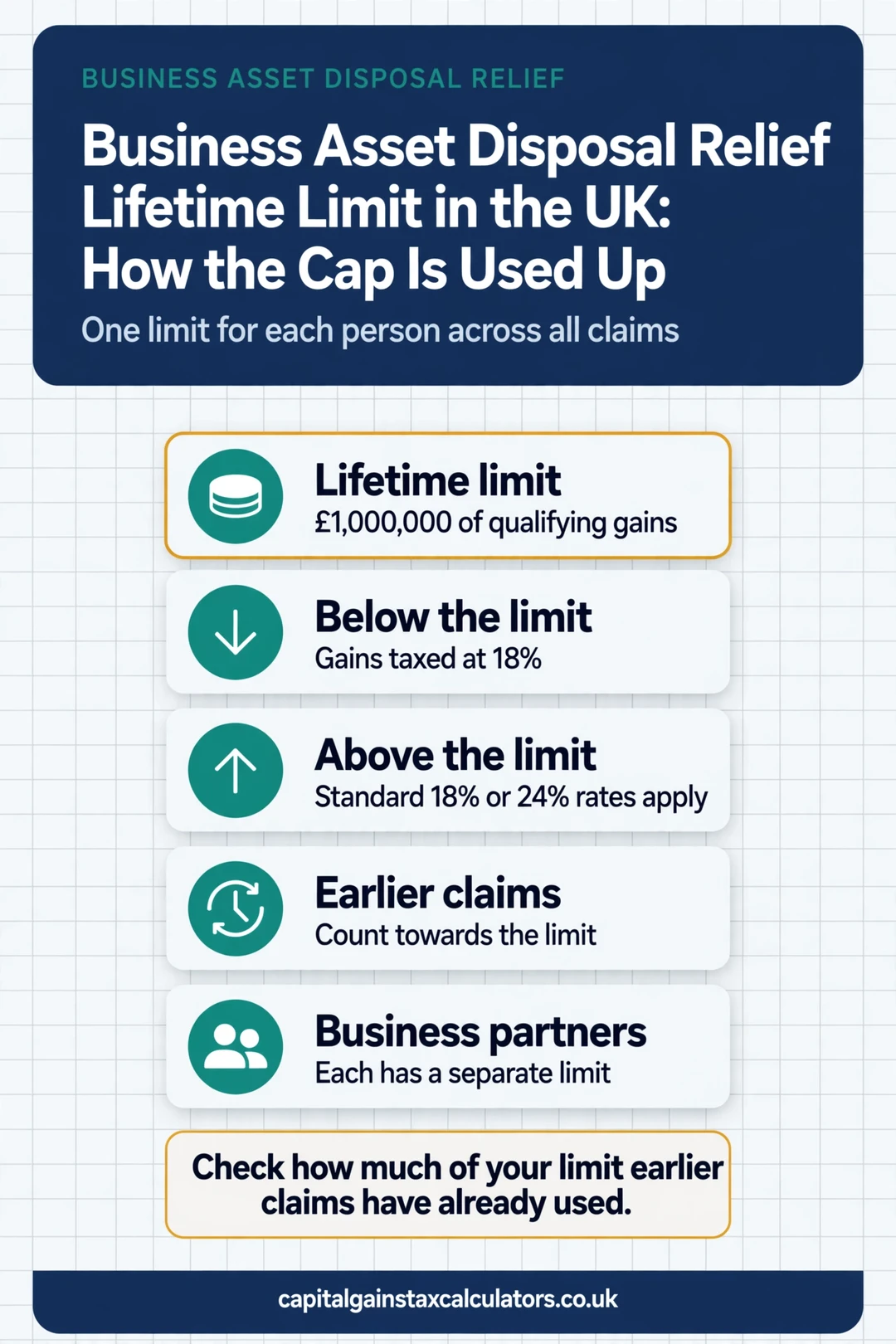
- The lifetime limit is £1,000,000 of qualifying gains, across all your disposals.
- The relief is now the same rate as the standard lower rate, so the saving comes from gains that would be taxed at 24%.
- You normally need a 5% shareholding and to be an officer or employee, for two years before the sale.
- You must claim the relief on your tax return, normally by the first anniversary of 31 January after the tax year of sale.
How this calculator works
Enter the gain on your qualifying disposal and your other taxable income. If you have already used some of your lifetime limit, enter the amount of gains that got the relief earlier. The calculator applies the 18% rate to the gain up to the remaining limit and the standard rates to anything above it. It shows the tax with the relief, the tax at normal rates and the saving.
Because the relief now matches the lower standard rate, the first slice of your gain inside the basic rate band is taxed at the same rate either way. The saving comes from gains that would otherwise be taxed at 24%. The calculator works through that for you.
| Input | What to enter | Tip |
|---|---|---|
| Qualifying gain | The gain on the business disposal | Work out gain first with the formula in our property or shares guides |
| Your income | Total taxable income for the year | Higher income means more gain at 24% |
| Relief used before | Qualifying gains that already used the limit | Includes earlier Entrepreneurs’ Relief gains |
| Other gains | Non-qualifying gains this year | Taxed at normal rates |
| Losses | Losses available this year | Set off before the allowance |
Worked example: selling a company
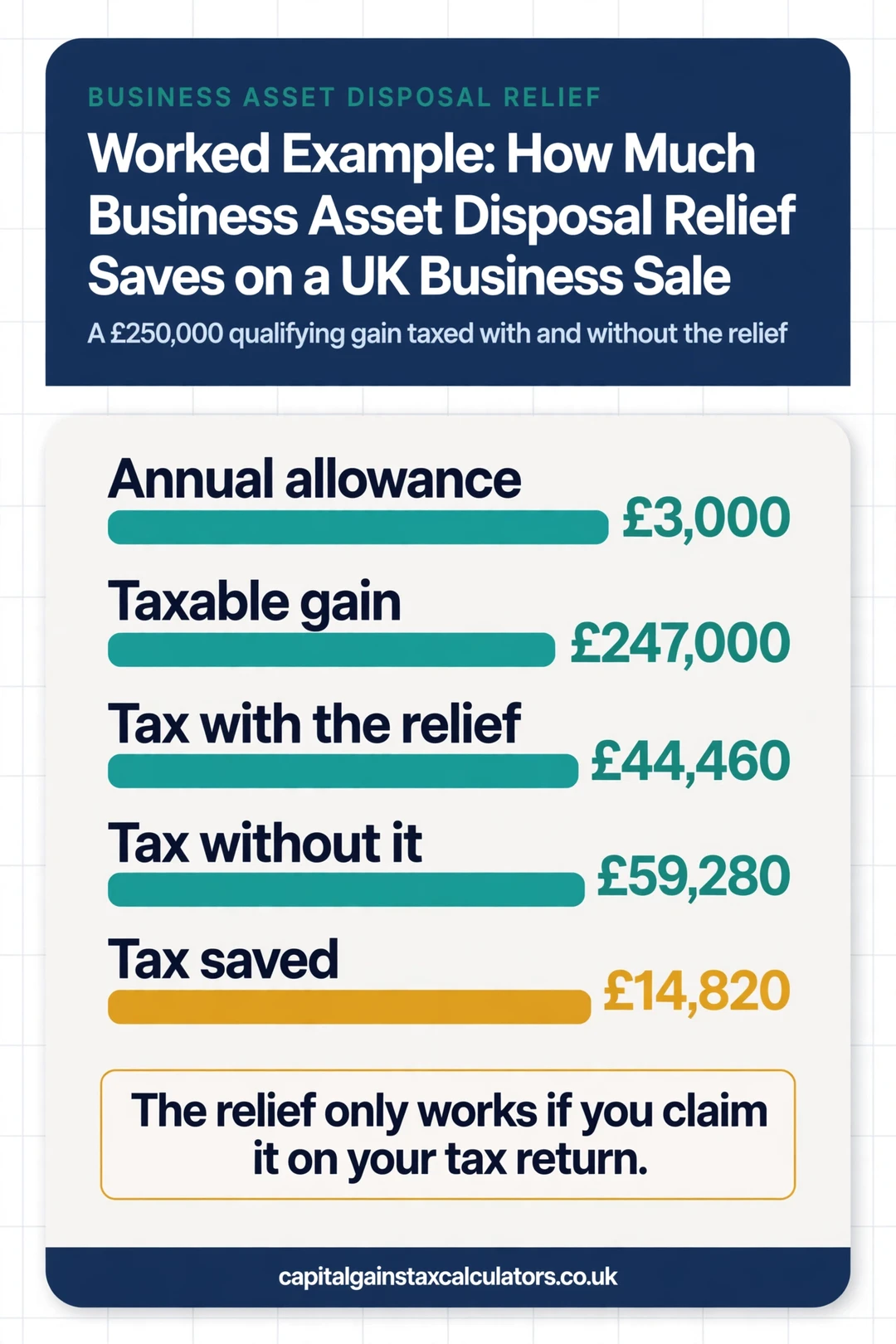
You sell your shares in a trading company for a gain of £250,000. Your other income is £60,000, and you have never used the relief.
Worked example
Tax on a £250,000 qualifying gain
- Qualifying gain: £250,000, within the £1,000,000 limit.
- Allowance: £3,000 is set against the highest-rate gain first.
- Taxable: £247,000, at 18%.
- Tax with BADR: £44,460.
- Tax at normal rates: £59,280.
- Saving from the relief: £14,820.
The saving depends on your income. With a lower income of £20,000, the standard rates would leave more of the gain in the basic rate band, so the saving falls to £13,004. A small gain of £80,000 on an income of £30,000 saves £3,404.
What happens above the lifetime limit
The £1,000,000 limit is a lifetime figure, not a yearly one. A gain of £1,400,000 would see £1,000,000 taxed at the BADR rate and £400,000 taxed at normal rates, giving £275,280 of tax. If you have already used £900,000 of the limit, only £100,000 of a new £250,000 gain qualifies, and the tax becomes £53,280.
| Gain | Limit already used | Qualifying at BADR rate | Over the limit | Tax |
|---|---|---|---|---|
| £250,000 | Nil | £250,000 | £0 | £44,460 |
| £250,000 | £900,000 | £100,000 | £150,000 | £53,280 |
| £1,400,000 | Nil | £1,000,000 | £400,000 | £275,280 |
Who qualifies
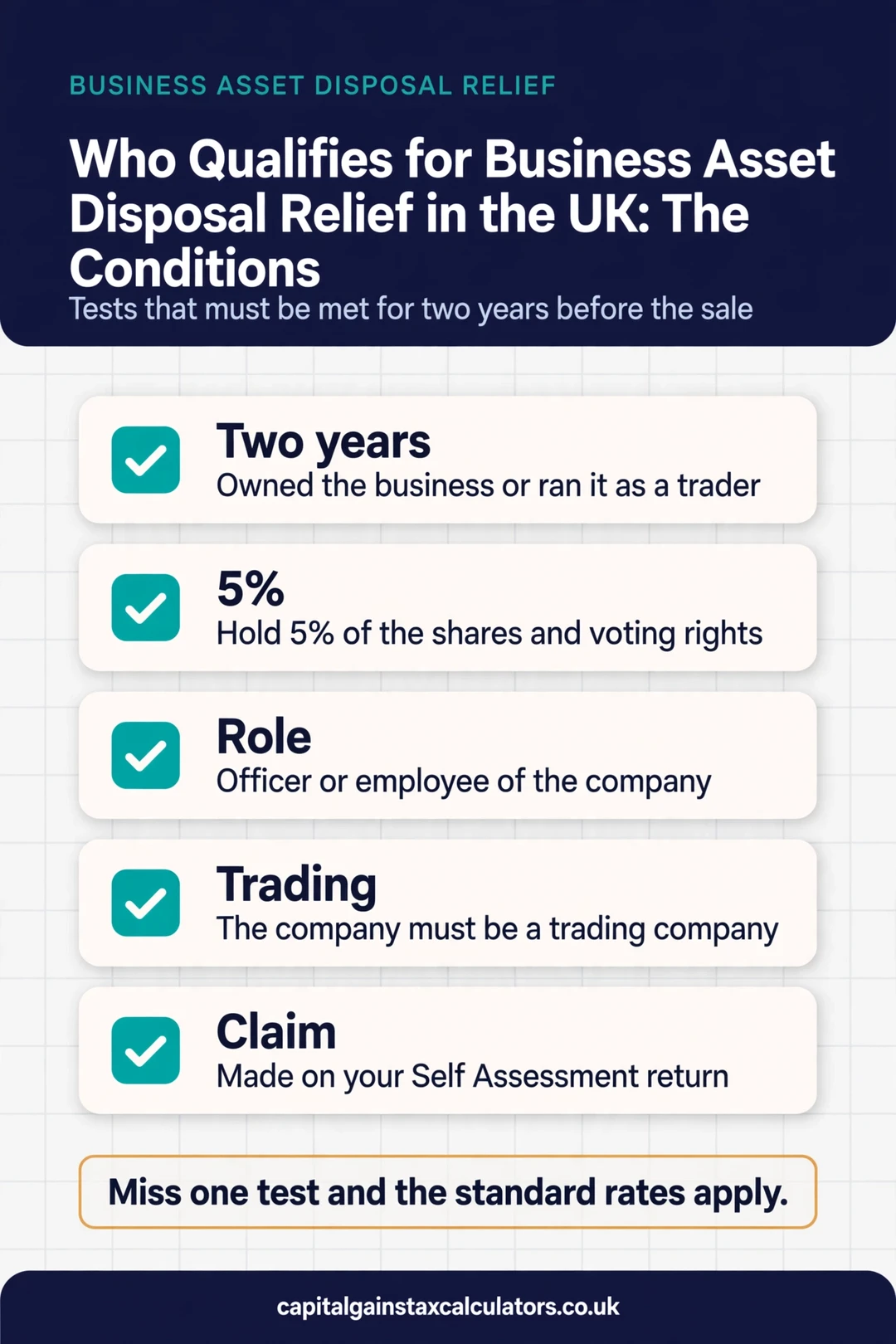
The conditions depend on what you are selling. You must meet them throughout the two years before the sale or before the business ended.
| What you sell | Main conditions |
|---|---|
| Sole trader business or a share of a partnership | Owned for at least two years, and you were trading |
| Shares in your personal company | At least 5% of the shares and voting rights, and an officer or employee, for two years |
| Assets used by your business | Sold as part of a withdrawal from the business, or by a partner, within three years of the business ending |
| Trustee sales | Beneficiary qualifies under the same business tests |
Our guide to Business Asset Disposal Relief goes through each test, including the changes for employee share options, and what happens if the company stops trading.
Claiming the relief
BADR is not automatic. You must claim it, usually on your Self Assessment return, and you may need to complete an extra page for the relief. The claim deadline is normally the first anniversary of the 31 January that follows the end of the tax year of sale. If you sell UK residential property, you do not use the 60-day return for BADR, because the relief is for businesses. Keep the evidence of your shareholding, your role and the trading status of the business. See our reporting guide for how to claim.
What this calculator does not cover
- Whether you meet the conditions. The calculator assumes you do.
- Gains partly from non-trading activities, which may be restricted.
- Investors’ Relief, which has a separate lifetime limit and conditions.
- Employee ownership trust sales, which have their own rules.
- Gains made through a trust, where the beneficiary must meet the tests.
Common mistakes with Business Asset Disposal Relief
- Not claiming it. The relief must be claimed, or you pay the higher tax.
- Missing the two-year tests. Meeting them on the date of sale is not enough.
- Falling below 5%. A dilution of your holding can end eligibility.
- Using the old rate. The rate has changed and may change again.
- Forgetting the lifetime limit. Earlier claims count against it.
- Assuming a property business qualifies. Letting property is usually not a trade.
What to do next
- Confirm that your business and role meet the two-year conditions.
- Run the calculator above with your gain and income.
- Read the Business Asset Disposal Relief guide to check the conditions in detail.
- Compare your options in our guide to ways to reduce Capital Gains Tax.
- Claim the relief on your tax return, as set out in our reporting guide.
Frequently asked questions
What is Business Asset Disposal Relief?
It is a Capital Gains Tax relief that lets you pay a reduced rate on gains from selling all or part of a qualifying business, or shares in your personal company, up to a lifetime limit of £1,000,000.
What is the Business Asset Disposal Relief rate for 2026/27?
18%. The rate was lower in earlier tax years, and it now matches the standard lower Capital Gains Tax rate.
Is Business Asset Disposal Relief worth claiming now?
It still helps if part of your gain would otherwise fall in the 24% band, because the relief taxes the qualifying gain at 18%. The calculator shows your saving.
Who qualifies for Business Asset Disposal Relief?
Sole traders, business partners, and people selling shares in a company where they hold at least 5% and are an officer or employee, for two years before the sale.
What is the lifetime limit?
£1,000,000 of qualifying gains across all your claims in your lifetime. Gains above that are taxed at the standard rates.
How do I claim the relief?
You claim it on your Self Assessment return for the tax year of the sale, normally by the first anniversary of the 31 January deadline for that return.
Does the annual exempt amount apply?
Yes. You can set the £3,000 allowance against any gains. It is applied to gains taxed at the highest rate first, which can make BADR gains less taxable.
Does BADR apply to rental property?
Not usually. Letting property is normally an investment, not a trade. Furnished holiday lets and some other property businesses may have different rules, so check the conditions.
Can I use BADR more than once?
Yes, until you reach the lifetime limit. Each claim uses part of the limit, and claims under the old Entrepreneurs’ Relief count towards it.
Does this calculator check that I qualify?
No. It assumes you meet the conditions. Use it to estimate the tax, then check the qualifying rules or take advice before you rely on the result.
Official sources
- GOV.UK: Business Asset Disposal Relief
- GOV.UK: Capital Gains Tax rates
- HMRC helpsheet HS275: Business Asset Disposal Relief
Related guides and calculators
This page gives general information for UK taxpayers and is not tax advice. Capital Gains Tax rules can change and your own circumstances matter. Check the latest rules on GOV.UK or with a qualified tax adviser before you act.