Quick answer
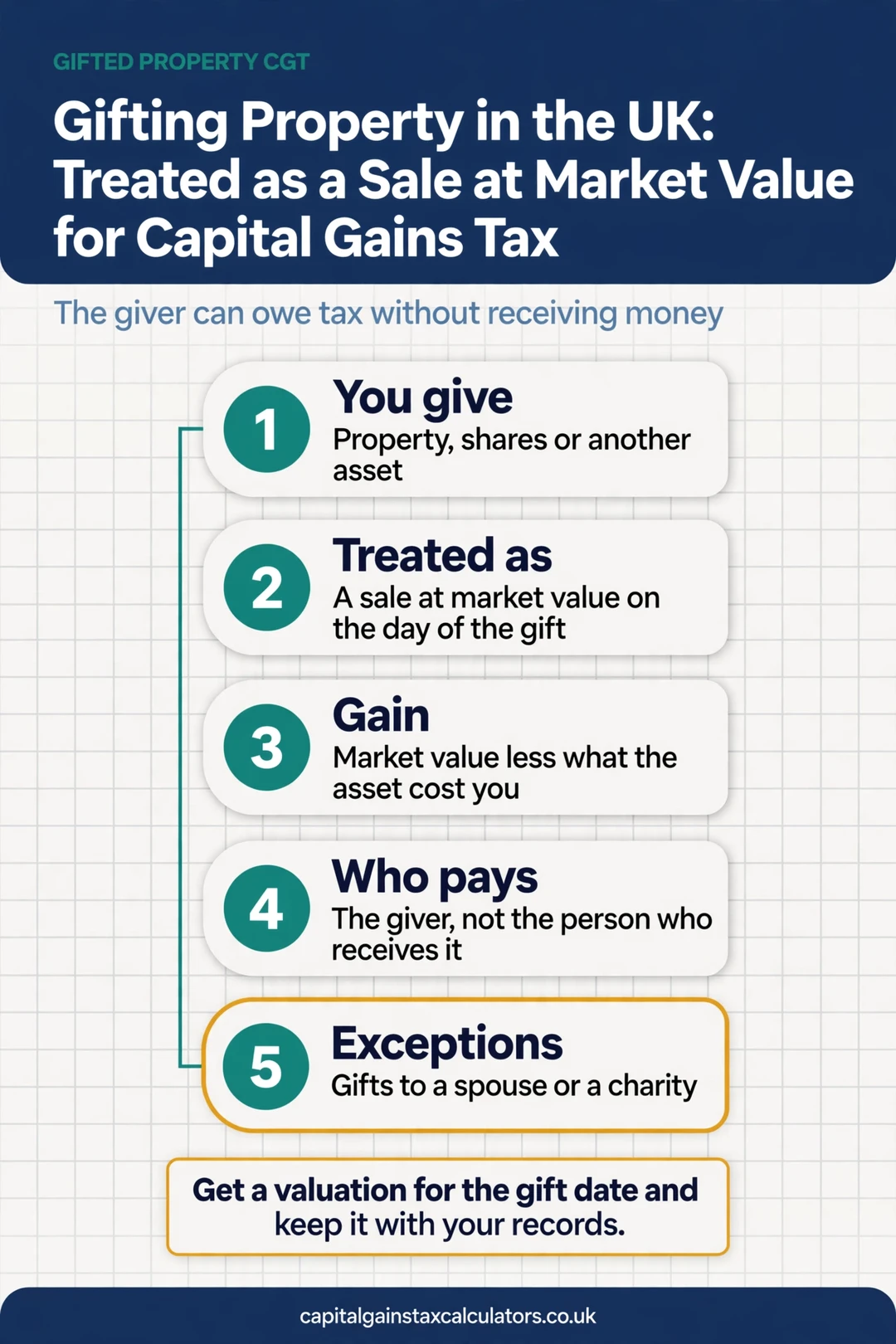
Giving away a property or other asset is treated as a sale at its market value on the day of the gift, even though no money changes hands. The gain is market value less what it cost you, and tax is due from the giver. Gifts to a spouse, civil partner or charity are not taxed. Gains above your £3,000 allowance are charged at 18% or 24%.
Key facts
- A gift to anyone other than a spouse, civil partner or charity is a disposal at market value.
- The giver pays the tax. The person receiving the gift pays nothing at that time.
- The recipient takes the market value as their cost, so later growth is the only gain they face.
- Gifts of UK residential property with tax due must be reported and paid within 60 days.
- Hold-over relief can postpone the gain on some business assets and gifts that are also chargeable to Inheritance Tax.
How this calculator works
Choose who you are giving the asset to, then enter the market value on the day, what the asset originally cost you, your buying costs and any improvements. Add your income so the calculator can pick the tax rate. For business assets, turn on hold-over relief to see how it removes the immediate gain.
If you want to give the asset to a spouse or civil partner, the calculator shows no tax and the base cost the recipient takes over. Use the spouse transfer calculator to see how sharing an asset between a couple changes the tax when it is sold.
| Input | What to enter | Tip |
|---|---|---|
| Market value on the day | A realistic open market value | Get a written valuation for property |
| Original cost | What you paid | Include buying fees and stamp duty |
| Improvements | Capital works you paid for | Keep invoices |
| Selling costs | Valuation and legal costs of the gift | Included in the gain calculation |
| Your income | Total taxable income | Sets the rate on the gain |
Worked example: giving a property to a child
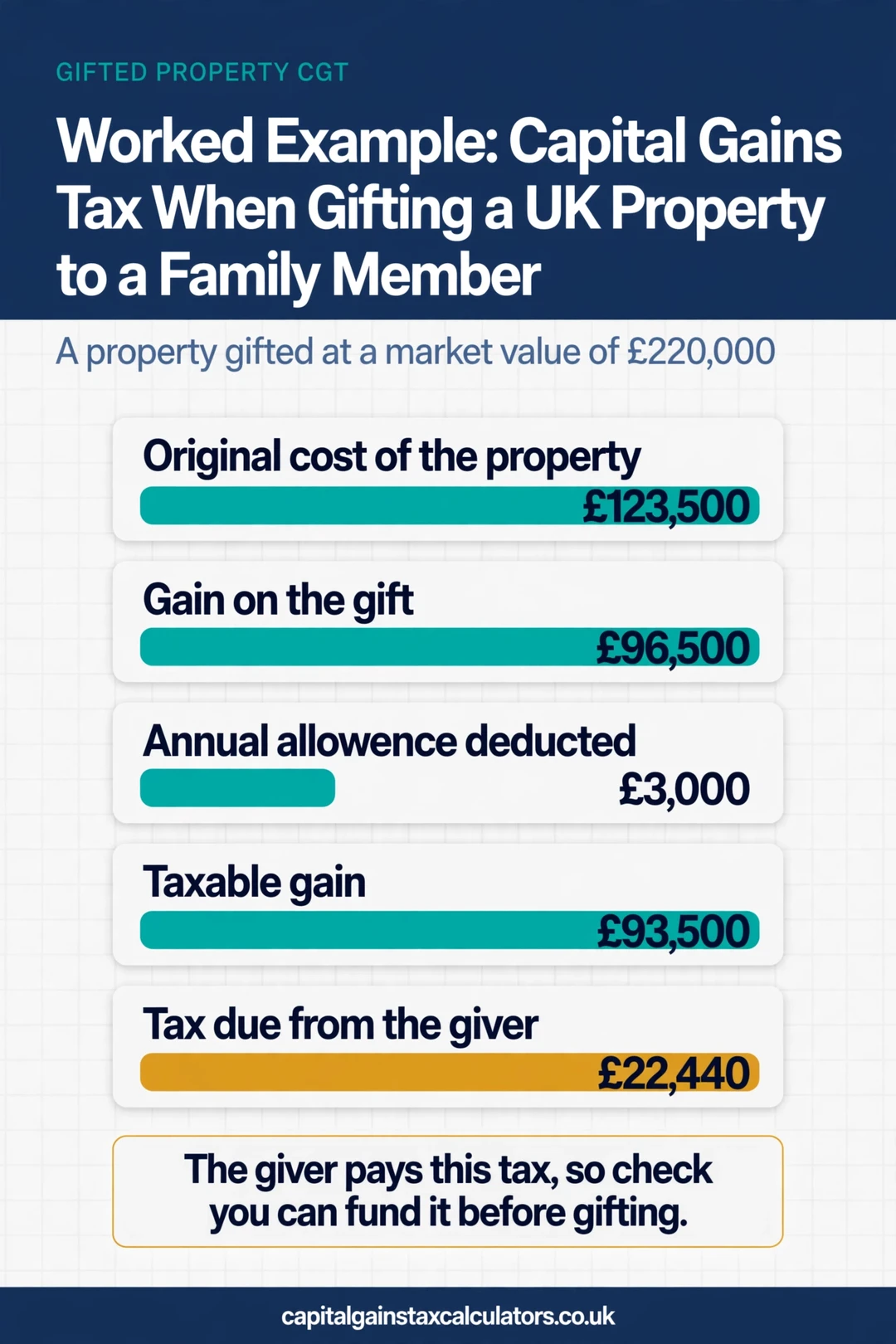
You give an investment property to your child. It is worth £220,000 on the day of the gift. You bought it for £120,000 and paid £3,500 in costs. Your income is £70,000.
Worked example
Gift of a £220,000 property
- Market value: £220,000.
- Less cost and fees: £123,500.
- Gain: £96,500.
- After the allowance: £93,500 is taxable, all at 24% because of your income.
- Tax payable by you: £22,440.
- Your child’s cost: £220,000.
If your income were only £25,000, part of the gain would be taxed at 18% and the tax would fall to £20,924. A gift that has lost value, such as giving the property when it is worth £100,000, creates a loss of £23,500. A loss on a gift to a connected person, such as a child, can only be used against gains on later disposals to that same person.
Gifts to a spouse, civil partner or charity
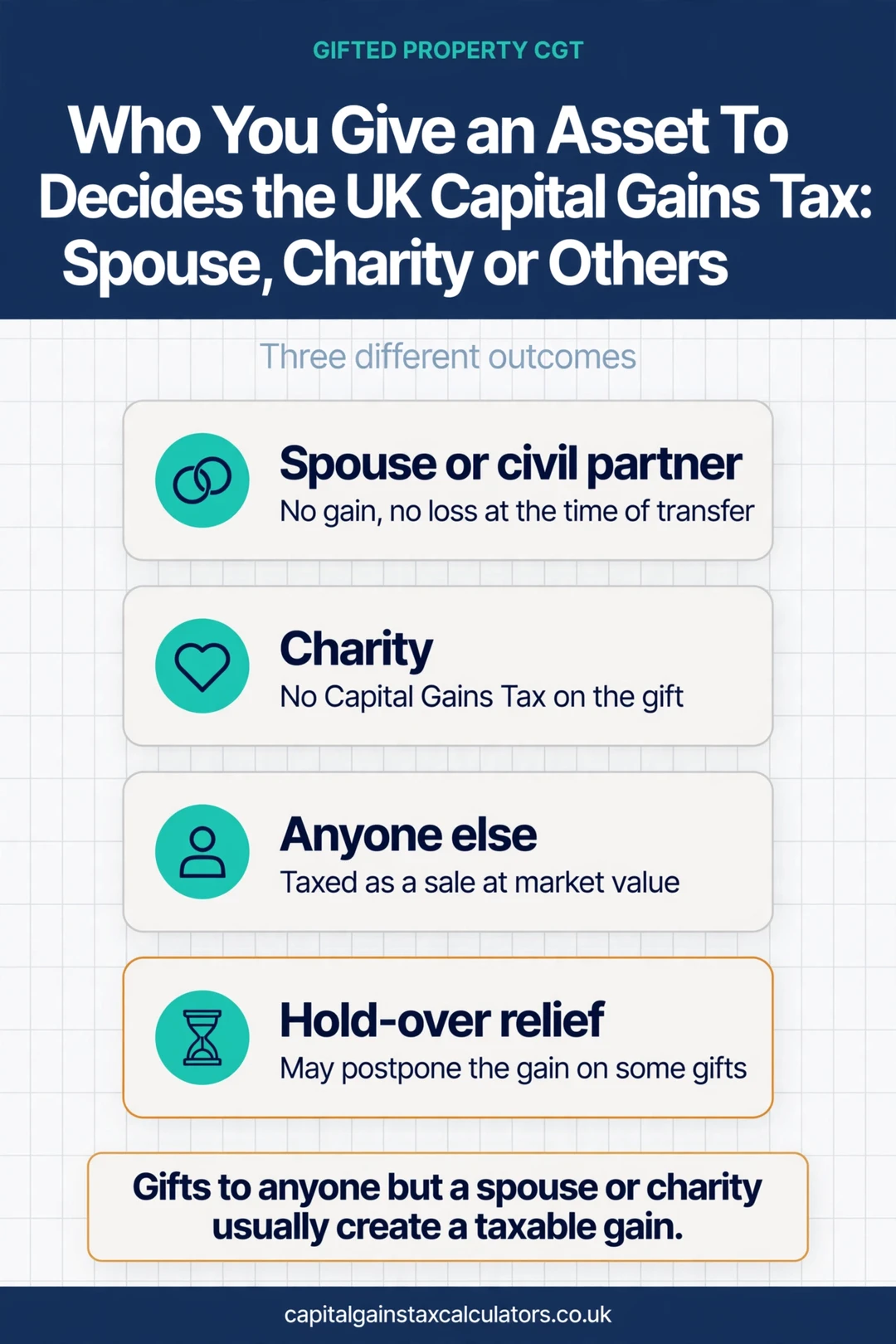
If you give an asset to your spouse or civil partner, and you live together, the transfer is no gain, no loss. They take over your original cost and date of acquisition, so there is no tax now. Giving the same property in our example to a spouse gives a tax of £0. A gift to a charity is also free of Capital Gains Tax, and the tax bill is £0.
| Recipient | Tax on the giver | Recipient’s cost |
|---|---|---|
| Spouse or civil partner (living together) | None | Your original cost |
| Registered charity | None | Not relevant |
| Child, parent or sibling | Gain at market value | Market value |
| Friend or other person | Gain at market value | Market value |
| Company you control | Gain at market value | Market value |
Hold-over relief
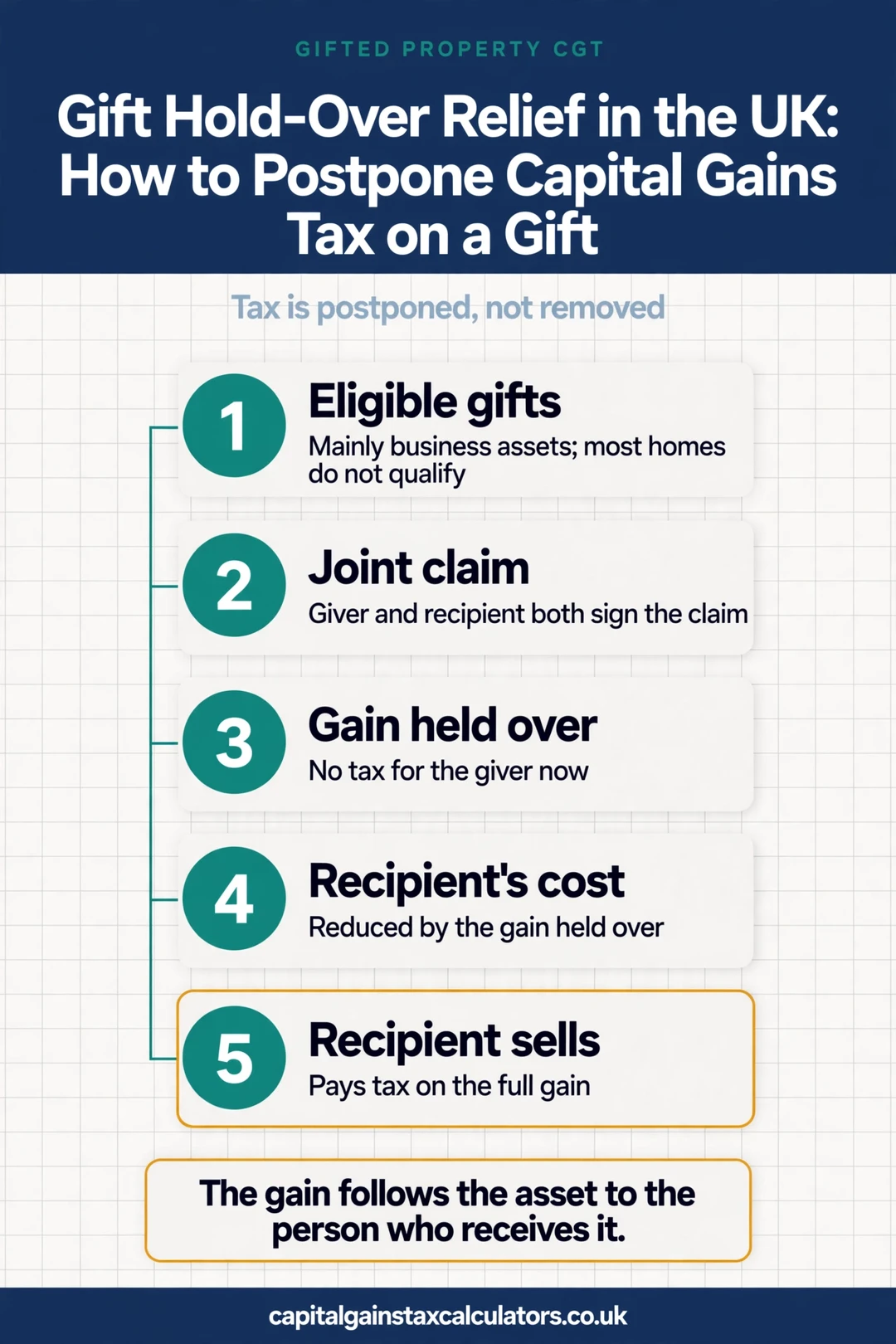
Hold-over relief lets you and the recipient jointly elect to postpone the gain on certain gifts. Neither of you pays tax at the time. The recipient takes the asset at its market value less the held-over gain, so they pay the tax when they eventually sell. It is available for gifts of business assets and for some gifts that are also chargeable lifetime transfers for Inheritance Tax. It is not available for a gift of ordinary residential property that you do not use in a business. With hold-over on a business asset in the example, the immediate tax falls to £0.
Selling to a family member for less than the market value
If you sell an asset to a family member for less than its market value, HMRC treats the sale as being at market value. The gain is based on that value, not on the price paid. This applies to sales to anyone connected with you, including relatives and companies you control. It also applies to gifts of part of a property, such as adding someone’s name to the title. Get a valuation for the date of the transaction and keep it with your records.
Reporting the gift
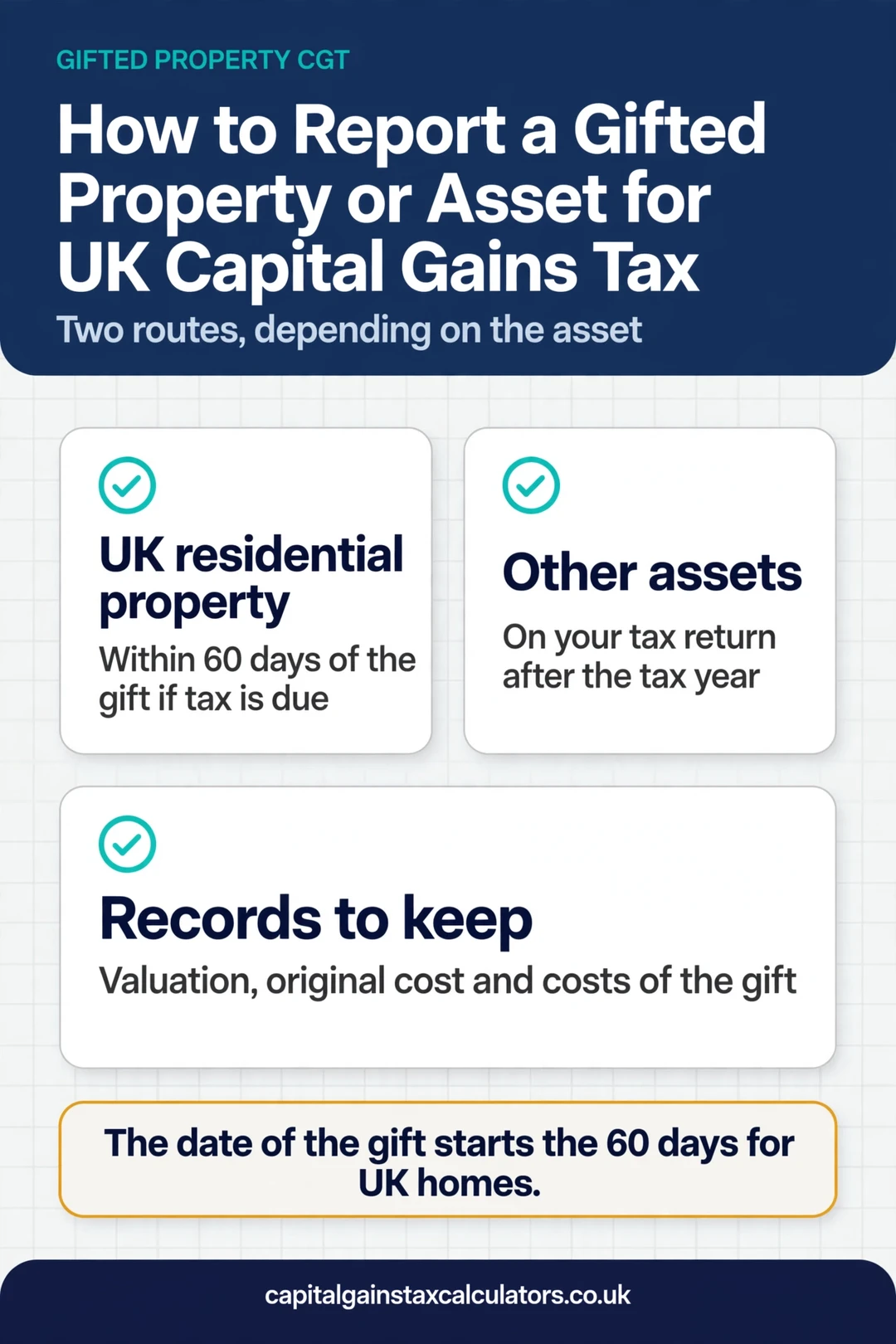
A gift of UK residential property that creates a gain must be reported and the tax paid within 60 days of the date of the gift. For other assets, report the gain on your Self Assessment return for the tax year of the gift. Our guide to Capital Gains Tax on gifts sets out the records to keep, and our reporting guide explains how to file the 60-day return.
What this calculator does not cover
- Inheritance Tax on large gifts, which has its own seven-year rules.
- Gifts of shares in a family company where other reliefs may apply.
- Gifts into trusts, which have separate rules and may use hold-over relief.
- Gifts made under a deed of variation after death.
- Tax for the recipient, who pays nothing until they sell.
Common mistakes with gifts
- Believing a gift has no tax. Only gifts to a spouse or charity are exempt.
- Using the purchase price as the sale price. The market value on the day is used.
- Not getting a valuation. HMRC may challenge a low figure.
- Missing the 60-day deadline. It applies to UK residential property gifts.
- Using hold-over for a normal home. It is limited to business assets and some trust transfers.
- Forgetting the spouse’s cost. They inherit your original cost, so the gain follows later.
What to do next
- Get a written market valuation for the date of the gift.
- Enter the values above to see the gain and tax.
- Read the gift rules guide to check reliefs and exemptions.
- If the recipient is your spouse, try the spouse transfer calculator.
- Report and pay within 60 days if the gift is UK residential property with tax due.
Frequently asked questions
Do I pay Capital Gains Tax when I give away a property?
Yes, unless you give it to your spouse, civil partner or a charity. A gift is treated as a sale at market value, and you pay tax on the gain above your £3,000 allowance.
Who pays the tax on a gift, the giver or the recipient?
The giver pays Capital Gains Tax on the gain. The recipient pays nothing on receiving the gift, but takes the market value as their cost for later.
How do I work out the market value of a gift?
Use the price the asset would fetch on the open market on the day of the gift. For property, a written valuation from a surveyor or agent is the safest evidence.
Is a gift to my spouse taxed?
No, if you are living together. The transfer is no gain, no loss, and your spouse takes over your original cost and the date you acquired it.
Can I give property to my children without tax?
Not usually. A gift to a child is a disposal at market value. You may owe tax on the gain, although the £3,000 allowance and any reliefs can reduce it.
What is hold-over relief?
A joint election by you and the recipient to postpone the gain. The recipient takes the asset at market value less the held-over gain, so they pay tax later when they sell. It is limited to certain gifts.
Do I need to report a gift to HMRC?
Yes, if there is a gain on UK residential property, you must report and pay within 60 days. Other gains go on your tax return if they exceed the allowance or the proceeds limit.
What if I sell an asset to a relative for less than it is worth?
HMRC treats the sale as being at market value, so the gain is worked out from that figure, not the price paid.
Is Inheritance Tax separate?
Yes. Large gifts can also be chargeable to Inheritance Tax if you die within seven years, and the two taxes can apply to the same gift.
Is this calculator enough for a gift of shares or a business?
It gives a basic estimate. Business reliefs, company law and trust rules may change the result, so take advice for those gifts.
Official sources
- GOV.UK: Capital Gains Tax: gifts
- HMRC helpsheet HS295: Relief for gifts and similar transactions
- GOV.UK: Report and pay Capital Gains Tax on UK property
Related guides and calculators
This page gives general information for UK taxpayers and is not tax advice. Capital Gains Tax rules can change and your own circumstances matter. Check the latest rules on GOV.UK or with a qualified tax adviser before you act.